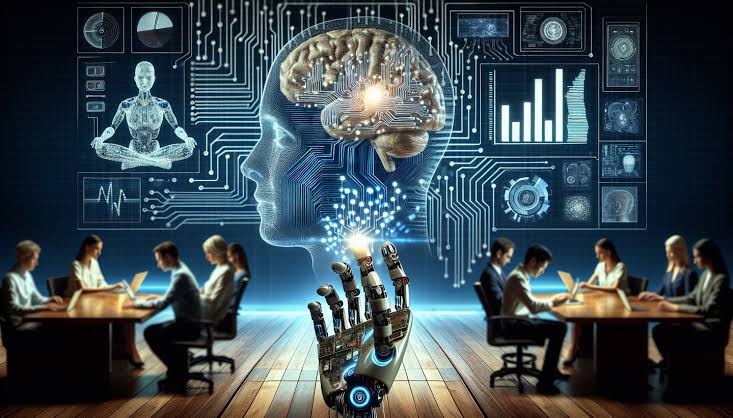
 Artificial Intelligence is often talked about as if it is already everywhere, but most of the systems people use today are still far from truly intelligent. They are fast, useful, and often impressive, yet they remain narrow, brittle, and heavily dependent on the data and rules humans provide.
The next big breakthrough will not simply be “better AI” in the current sense. It will be a shift from systems that appear smart in limited tasks to systems that can reason, adapt, learn with far less data, and operate more like flexible problem-solvers in the real world.
For years, the public imagination has been shaped by chatbots, recommendation engines, image generators, and predictive tools. These technologies are valuable, but they represent only a small slice of what intelligence could mean.
Much of today’s AI is what experts might call “not smart” AI: systems that can perform specific functions extremely well without understanding context in a human-like way. They can classify, predict, and generate, but they do not truly grasp meaning. They do not have common sense, long-term goals, or a stable model of the world unless those are carefully engineered into them. The next breakthrough will likely come from overcoming these limitations. For a broader look at how AI is affecting everyday costs, see why tech costs keep climbing.
Why today’s AI still feels “not smart”
Modern AI can sound convincing while still making obvious mistakes. A language model may write fluent paragraphs but invent facts. A vision model may identify objects accurately in one setting but fail when the lighting changes or the object is partly hidden.
A predictive system may work well in testing and collapse when conditions shift. These failures expose a core issue: current AI is often pattern recognition without deep understanding.
That does not make it useless. On the contrary, pattern recognition at scale has transformed industries. But there is a big difference between performing a task and understanding it.
Most current systems rely on statistical associations drawn from massive datasets. They are trained to match patterns, not to reason from first principles. They excel in environments that resemble their training data and struggle when asked to generalize beyond it.
This is why many people feel that AI is both astonishing and disappointing at the same time. It can draft emails, summarize documents, and generate code, yet still misunderstand a simple instruction or fail at a basic logic puzzle.
The gap between performance and intelligence is the space where the next breakthrough will happen.
The next big breakthrough after “not smart” AI
The next big step in Artificial Intelligence will likely be systems that combine multiple capabilities instead of excelling at only one. Future AI will not just generate text or images; it will plan, verify, adapt, and learn continuously.
It will use tools, remember prior interactions, reason through uncertainty, and collaborate with humans more naturally.
1. Reasoning beyond pattern matching
One of the most important breakthroughs will be improved reasoning. This means AI that can follow chains of logic more reliably, break complex problems into smaller steps, and check its own work.
Today’s models often simulate reasoning in a way that looks convincing, but real progress will come when systems can perform more robust internal verification and correction.
This could transform tasks like scientific discovery, engineering design, legal analysis, and strategic planning. Instead of merely suggesting likely answers, AI could evaluate alternatives, identify contradictions, and produce more dependable conclusions.
2. Memory and continuity
Humans learn by remembering. Most current AI systems, however, are limited in their ability to retain meaningful long-term context. They may keep a conversation thread alive for a while, but they do not naturally develop persistent understanding unless memory is explicitly added.
The next generation of AI will likely have stronger memory systems that allow it to build continuity over time. That means remembering user preferences, prior decisions, project history, and evolving goals.
With better memory, AI can become more useful as a collaborator rather than a one-off tool.
3. Multimodal understanding
Another major leap is multimodality: the ability to understand and integrate text, images, audio, video, and possibly sensory or spatial data at once. Humans do not think in only one format, and neither should advanced AI.
A system that can watch a video, read supporting documents, listen to a spoken explanation, and then produce a coherent response is far more powerful than one that handles each input separately.
This kind of integrated understanding will improve robotics, healthcare, education, design, and accessibility.
4. Tool use and action
A truly useful AI must do more than answer questions. It should take action. That means interacting with software, searching databases, running calculations, drafting files, scheduling workflows, and coordinating tasks across systems.
Tool-using AI will blur the line between assistant and operator. Instead of telling a user what to do, it will help complete the task.
This shift is especially important for business automation, where AI can reduce repetitive work and support higher-level decision-making.
5. Learning in the real world
Current AI is mostly trained in advance and then deployed. Future systems will likely learn more dynamically, improving from interaction without needing full retraining every time the environment changes.
This type of adaptation is crucial for robotics, autonomous systems, and personalized digital assistants. A machine that can learn from feedback, correct its assumptions, and adjust its behavior in new settings will be much closer to practical intelligence than one that only repeats what it learned during training.
Why this breakthrough matters
The next big breakthrough in AI will matter because it changes the relationship between humans and machines. Today, AI is often treated like a clever calculator for language, images, or predictions.
Tomorrow, it could become a general-purpose support system that helps people think, decide, create, and act more effectively.
In healthcare, more adaptive AI could help doctors interpret complex records, detect early warning signs, and personalize treatment. In education, it could serve as a patient tutor that adapts to each student’s pace and style.
In business, it could manage workflows, synthesize reports, and support strategy. In science, it could help generate hypotheses and test them faster than traditional methods allow. The value is not just in speed.
It is in expanding human capability. The most meaningful AI systems will not replace human judgment; they will sharpen it.
Challenges on the path to smarter AI
The move beyond “not smart” AI is not automatic. There are serious challenges ahead. Reliability remains a major issue, especially in high-stakes environments. Safety and alignment are also critical, because more capable systems must be guided by clear constraints and trustworthy behavior.
Another challenge is data quality. If AI learns from biased, incomplete, or misleading information, it can amplify mistakes at scale. And as systems become more autonomous, transparency becomes even more important.
People need to understand when AI is uncertain, how it reached a conclusion, and where its limits lie. There is also the question of economics and access.
If the next breakthrough is concentrated in the hands of a few large companies, its benefits may be unevenly distributed. A truly transformative wave of AI should be widely useful, not just technically impressive.
For more context on the privacy side of AI development, read the BBC report on Meta halting AI training tracking over privacy fears.
The human role in the future of AI
Even as AI becomes more capable, humans will remain essential. We define goals, assign values, evaluate outcomes, and decide how technology should be used.
The best future is not one in which AI becomes a detached replacement for people. It is one in which AI becomes a powerful partner that extends human intelligence.
That means designing systems that are controllable, understandable, and aligned with human priorities. It also means learning how to work with AI effectively.
The people and organizations that succeed will not be those who simply use the latest tools, but those who know how to combine machine capability with human insight.
Conclusion: from narrow intelligence to real capability
Artificial Intelligence is moving toward a new phase. The first wave gave us systems that could perform impressive tasks but still lacked deeper intelligence.
The next wave will focus on reasoning, memory, multimodal understanding, tool use, and continuous learning. That is the real breakthrough after “not smart” AI: not just faster automation, but more flexible and reliable machine intelligence.
This evolution will not happen overnight, and it will not be perfect. But the direction is clear. The future of AI is not about machines that merely sound smart.
It is about systems that can genuinely help solve complex problems in a world that is messy, changing, and deeply human.