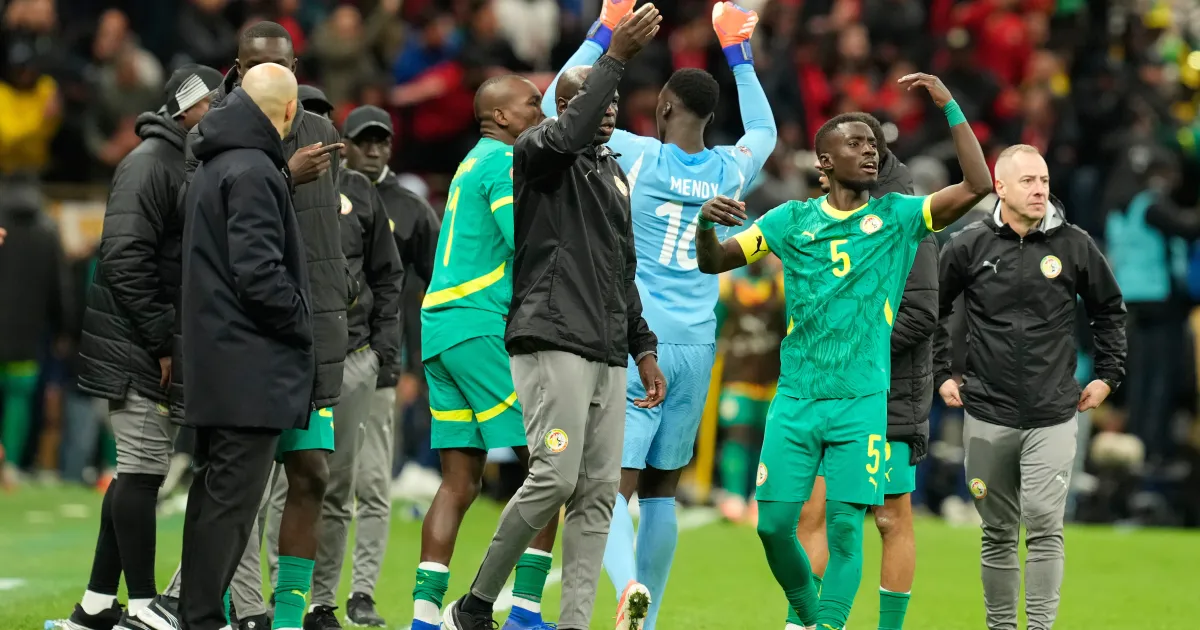
 Senegal trapped in football hell: first Afcon, now World Cup woes. The phrase has become a haunting refrain for a nation that once stood as the pride of African football. Just a few years ago, the Lions of Teranga roared to their first Africa Cup of Nations title in 2022, followed by a historic run to the Round of 16 at the 2022 World Cup in Qatar. Yet, the euphoria has evaporated, replaced by a bitter taste of underachievement and missed opportunities. The current trajectory suggests a team in crisis, stumbling from one tournament disappointment to another, leaving fans and pundits questioning what went wrong.
The descent began subtly at the 2023 Africa Cup of Nations in Ivory Coast. Senegal entered as defending champions and favorites, boasting a squad packed with talent from Europe’s top leagues. But the tournament ended in a shocking Round of 16 exit at the hands of hosts Ivory Coast, who went on to win the title. The loss was more than a mere upset; it exposed deep-seated issues. The team lacked cohesion, creativity in the final third, and the tactical discipline that had defined their golden generation. Coach Aliou Cissé, once hailed as a hero, faced mounting criticism for his conservative tactics and inability to adapt during matches. The defeat felt like a fall from grace, a stark reminder that past glory does not guarantee future success.
Now, the World Cup qualifying campaign has turned into a nightmare. Senegal trapped in football hell: first Afcon, now World Cup woes. The team currently sits in a precarious position in Group B of the CAF qualifiers. With only the group winner securing an automatic spot for the 2026 World Cup, Senegal finds itself locked in a fierce battle with Sudan, Togo, and the Democratic Republic of Congo. A recent 1-0 loss to Sudan in June 2024 was a devastating blow, leaving the Lions in second place, trailing the group leaders by two points. The defeat was emblematic of the team’s struggles: a lack of cutting edge, defensive lapses, and an over-reliance on individual brilliance rather than collective strategy. The path to the World Cup now looks treacherous, with every remaining match a must-win.
Several factors have contributed to this downward spiral. First, the aging core of the squad is showing signs of fatigue. Stars like Sadio Mané, Kalidou Koulibaly, and Idrissa Gueye are still world-class, but they are no longer in their prime. The supporting cast has failed to step up consistently. Young talents like Nicolas Jackson and Pape Matar Sarr have shown flashes of brilliance but lack the consistency to carry the team through tough matches. Second, the tactical rigidity under Cissé has become a liability. His preference for a cautious, defensive approach often stifles the team’s attacking potential, especially against weaker opponents who sit deep. Third, there is a growing sense of complacency within the squad. After winning the Afcon, some players may have lost the hunger that drove them to success. The hunger that once made Senegal a feared opponent has been replaced by a sense of entitlement.
The psychological toll on the nation is palpable. Football is more than a sport in Senegal; it is a unifying force, a source of national pride. The World Cup qualifying struggles have dampened spirits across the country. Social media is flooded with frustrated fans calling for change, from tactical overhauls to the dismissal of Cissé. The pressure is immense, and the players feel it. In interviews, they speak of the weight of expectation, the fear of letting down a nation that has invested so much hope in them. This mental burden often translates into nervous performances, where simple passes go astray and decision-making falters under pressure.
To escape this hell, Senegal must undergo a fundamental reset. The first step is acknowledging the problem. The team cannot rely on past achievements to carry them through. They need a fresh tactical approach that maximizes the strengths of the current squad. This might mean adopting a more fluid attacking system, giving young players more responsibility, and fostering a culture of accountability. Cissé must also be willing to evolve, perhaps by bringing in a more modern coaching staff to complement his experience. The federation must invest in grassroots development to ensure a steady pipeline of talent, rather than depending solely on established stars.
The road ahead is daunting, but not impossible. Senegal still has quality players capable of turning the tide. The upcoming matches against Togo and DR Congo are critical. A win could restore confidence and reignite the campaign. However, another slip-up could spell disaster, leaving the Lions of Teranga watching the 2026 World Cup from home. The nation waits with bated breath, hoping that this is not the end of an era, but a painful lesson that leads to a stronger, more resilient team. Senegal trapped in football hell: first Afcon, now World Cup woes. The question remains: can they find a way out, or will they remain trapped in this cycle of disappointment? Only time will tell, but the clock is ticking.