
 Written by
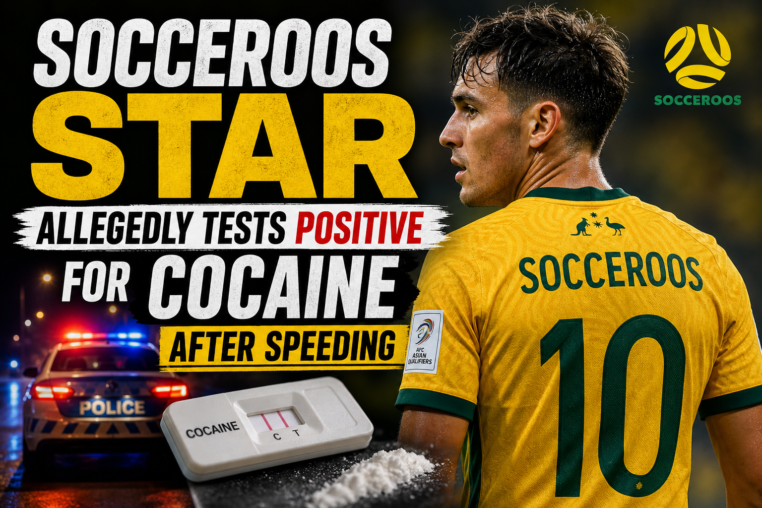
 A prominent Socceroos star is facing a potential career crisis and legal jeopardy after allegedly testing positive for cocaine following a high-speed traffic incident. The player, whose identity has not been officially confirmed by Football Australia due to privacy protocols, was reportedly pulled over by police for exceeding the speed limit by a significant margin. Subsequent roadside testing allegedly returned a positive result for the illicit substance, triggering a complex legal and sporting investigation that could have severe consequences for the athlete’s professional future.
The incident occurred late last week when the player was stopped by highway patrol officers. According to initial police reports, the vehicle was clocked traveling well above the posted limit in a suburban area. During the routine traffic stop, officers conducted a roadside drug test, which allegedly indicated the presence of cocaine. The player was subsequently taken into custody for further testing and questioning. While the player has not made a public statement, sources close to the situation indicate that legal representation has been secured and that the athlete is cooperating with authorities.
The ramifications of this case extend far beyond a simple traffic violation. For the player, a positive test for cocaine represents a breach of both the law and the strict anti-doping codes enforced by Football Australia and the Asian Football Confederation. Under the World Anti-Doping Agency (WADA) code, cocaine is classified as a substance of abuse, but it is still prohibited in competition. Depending on the timing of the test and the player’s status, he could face a suspension ranging from several months to several years. This would effectively sideline him from international duty, including crucial World Cup qualifiers, and could jeopardize his club contract.
The news has sent shockwaves through the Australian football community. Fans and pundits alike are struggling to reconcile the image of a national hero with the allegations of drug use and reckless driving. The Socceroos have long prided themselves on a culture of professionalism and discipline, particularly under the guidance of head coach Graham Arnold. This incident threatens to undermine that reputation and raises uncomfortable questions about the pressures faced by elite athletes. The player in question is a key figure in the squad, known for his skill and leadership on the pitch. His potential absence would be a significant blow to the team’s tactical setup and morale.
From a legal perspective, the player faces a dual challenge. The criminal aspect involves potential charges for speeding and driving under the influence of drugs. If convicted, he could face fines, license suspension, and even a prison sentence, depending on the severity of the offense and the jurisdiction. The sporting aspect is equally daunting. Football Australia will likely launch its own investigation, separate from the police inquiry. The governing body has a zero-tolerance policy regarding performance-enhancing and recreational drugs. A positive test could result in an immediate provisional suspension pending a full hearing.
The timing of this incident could not be worse. The Socceroos are in the midst of a critical World Cup qualifying campaign, with every match vital to securing a spot in the next tournament. The team relies heavily on its core of experienced players, and losing one to a suspension would force Arnold to reshuffle his lineup. Furthermore, the distraction of the scandal could affect team cohesion and focus. The player’s club, which has not been named, will also be monitoring the situation closely. Club contracts often contain clauses regarding conduct and drug use, meaning the player could face disciplinary action from his employer, including termination of his contract.
The broader conversation around this case touches on the pressures of professional sport and the availability of support systems for athletes. Many are calling for better mental health resources and education on the dangers of substance abuse. While the player must ultimately take responsibility for his actions, the incident highlights the need for a more holistic approach to athlete welfare. The spotlight is now on Football Australia to handle the matter with transparency and fairness, while also protecting the integrity of the sport.
In the coming days, more details are expected to emerge. The player will likely undergo a confirmatory test, and the results of that analysis will be crucial. If the initial finding is confirmed, the path forward will be difficult. The Socceroos star allegedly testing positive for cocaine after speeding is a story that has captivated the nation, serving as a stark reminder of how quickly a career can be derailed by a single moment of poor judgment. The football world now waits to see how the player, his club, and the national governing body will navigate this turbulent chapter.