
 Written by
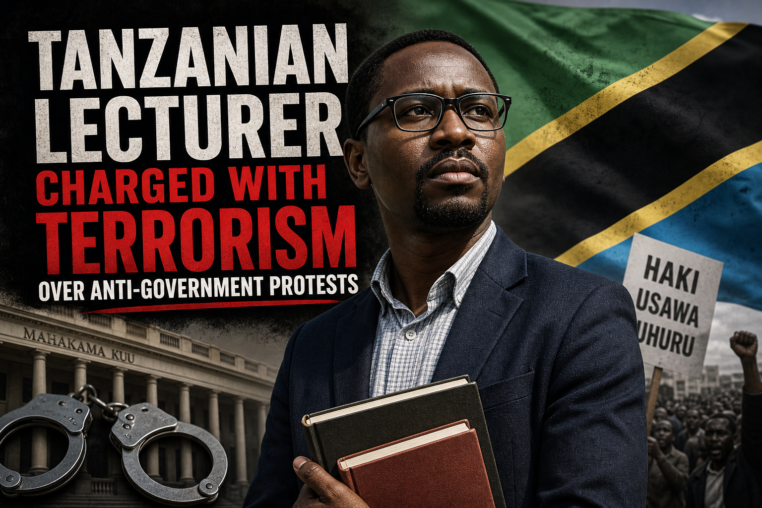
 A Tanzanian lecturer has been charged with terrorism-related offenses following his alleged involvement in anti-government protests, a case that has drawn significant attention to the state of academic freedom and political dissent in the country. The incident underscores a broader pattern of crackdowns on opposition voices in Tanzania, raising concerns among human rights organizations about the shrinking space for civil liberties. The lecturer, who taught at a public university, was arrested after participating in demonstrations that called for greater government accountability and an end to alleged corruption. His prosecution under anti-terrorism laws has sparked debate about the use of such legislation to silence critics.
The charges stem from protests that erupted in several cities in Tanzania, where citizens voiced frustration over economic hardships, governance issues, and a perceived lack of political openness. The lecturer, whose identity has been withheld for legal reasons, was accused of inciting violence and organizing unlawful assemblies. Prosecutors argued that his actions posed a threat to national security, while defense lawyers countered that he was exercising his constitutional right to peaceful assembly and free speech. The case has been adjourned pending further hearings, with the accused held in custody without bail, a decision that has been criticized by legal experts as excessive.
This incident is not isolated. Tanzania has seen a series of similar cases in recent years, where activists, journalists, and academics have been charged with terrorism or related crimes for engaging in political activities. The government maintains that such measures are necessary to maintain order and prevent instability, but critics argue that they are used to stifle dissent. The United Nations and other international bodies have repeatedly called for Tanzania to uphold its commitments to human rights, including freedom of expression and association. The lecturer’s case has become a symbol of these tensions, drawing attention from global advocacy groups.
The broader context includes a controversial constitutional amendment in 2020 that gave the president sweeping powers to appoint judges and security officials, which opponents say has weakened checks and balances. Additionally, the government has tightened laws on online speech, making it easier to prosecute individuals for social media posts deemed critical of the state. The lecturer’s alleged involvement in protests was partly documented through his online activity, where he shared calls for demonstrations. This has raised questions about the extent to which digital surveillance is being used to monitor and target dissidents.
The impact on academia has been profound. Many lecturers and students now fear expressing opinions that could be construed as political, leading to self-censorship. Some universities have reported a decline in open debates and research on sensitive topics. The arrested lecturer’s colleagues have expressed solidarity but also caution, highlighting the precarious balance between academic freedom and personal safety. International academic networks have condemned the charges, urging the Tanzanian government to release the lecturer and respect due process.
The case also reflects deeper societal divisions. While some Tanzanians support the government’s stance, viewing the protests as destabilizing, others see the charges as an overreach. Civil society organizations have organized peaceful rallies and petition drives, though these too have faced restrictions. The judiciary, meanwhile, is under scrutiny for its independence, with critics noting that judges often side with the government in politically charged cases. The lecturer’s legal team plans to challenge the terrorism charges, arguing that they are disproportionate and lack evidence.
Looking ahead, the outcome of this case could set a precedent for how Tanzania handles political dissent. If the lecturer is convicted, it may embolden further crackdowns, while an acquittal could signal a shift toward greater tolerance. However, given the current political climate, many observers are pessimistic. The international community continues to monitor the situation, with some countries threatening sanctions if human rights abuses persist. For now, the lecturer remains in custody, and his fate hangs in the balance, serving as a stark reminder of the challenges facing democratic expression in Tanzania.