 Written by
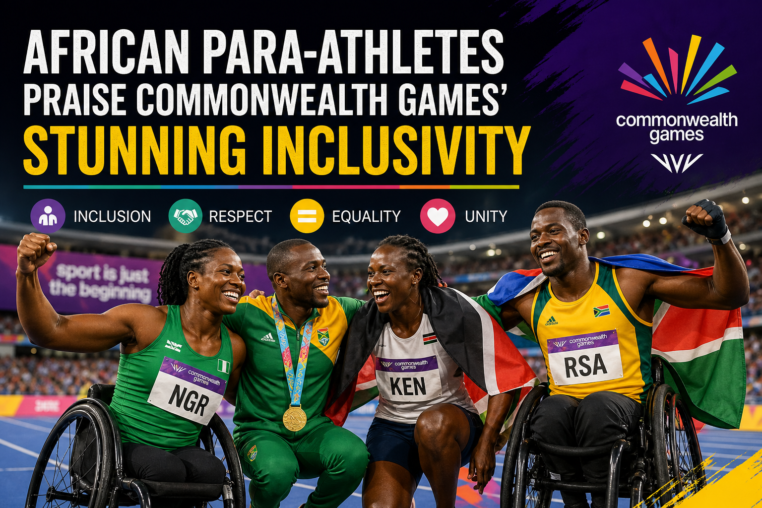
 African para-athletes have praised the Commonwealth Games for their stunning inclusivity, marking a significant shift in how major multi-sport events accommodate athletes with disabilities. The recent edition of the Games, held in Birmingham, set a new benchmark for accessibility and integration, earning widespread acclaim from competitors, coaches, and advocacy groups. For many para-athletes from across the African continent, the experience was not just about competing but about feeling truly seen and valued as elite performers.
The Commonwealth Games have historically been a leader in including para-sport events, but the 2022 edition took this commitment to an unprecedented level. For the first time, the Games featured a fully integrated program, with para-sport events occurring alongside able-bodied competitions within the same venues and schedule. This seamless integration meant that para-athletes were not relegated to separate facilities or treated as an afterthought. Instead, they shared the same warm-up areas, dining halls, and village accommodations, fostering a genuine sense of community and mutual respect among all athletes. African para-athletes, many of whom come from nations where disability sport receives limited funding and visibility, found this level of inclusion deeply empowering.
One of the most lauded aspects of the Games was the accessibility of the venues. From the moment athletes arrived, they encountered a thoughtfully designed environment. Wheelchair ramps were not afterthoughts but integral parts of the architecture. Lifts were spacious and reliable, and signage included braille and clear visual cues. The transport system, including dedicated shuttle buses, was fully wheelchair accessible, allowing athletes to move freely between the village, training sites, and competition arenas without stress. For many African para-athletes, who often train in facilities that are not fully accessible, this attention to detail was a revelation. It allowed them to focus entirely on their performance rather than navigating logistical barriers.
Beyond the physical infrastructure, the Games’ organizational inclusivity extended to the competition itself. The classification system, which ensures fair competition by grouping athletes based on their functional abilities, was handled with transparency and efficiency. Athletes reported that classifiers were respectful, knowledgeable, and communicative, reducing the anxiety that often accompanies this process. Furthermore, the scheduling of events was carefully managed to avoid conflicts, ensuring that para-sport finals received prime-time slots and significant media coverage. This visibility was crucial for African para-athletes, many of whom are accustomed to competing in near-anonymity. Seeing their events broadcast live and attended by packed crowds was a powerful affirmation of their status as elite athletes.
The impact of this inclusivity extended far beyond the competition arena. For many African para-athletes, the Games provided a platform to challenge stereotypes and change perceptions back home. They returned to their countries not just with medals, but with stories of being treated with dignity and respect. This has sparked conversations about the need for greater investment in disability sport and accessible infrastructure across the continent. Several athletes have become vocal advocates, using their newfound visibility to push for policy changes and increased funding. The Commonwealth Games, by demonstrating what is possible, have become a catalyst for change in nations where para-sport has long been marginalized.
The psychological benefits of such an inclusive environment cannot be overstated. Para-athletes often face a double burden: the physical challenges of their sport and the societal stigma associated with disability. Being part of an event where they were celebrated as athletes first, and where their disabilities were accommodated without fanfare, was profoundly uplifting. Many African competitors spoke of a renewed sense of purpose and pride. They felt that their years of grueling training and sacrifice were finally being recognized on a global stage. This sense of belonging and validation is a powerful motivator, and it is likely to inspire a new generation of para-athletes across Africa to pursue their dreams.
In conclusion, the Commonwealth Games’ stunning inclusivity has set a new standard for international sporting events. African para-athletes have been among the most vocal in their praise, highlighting how the Games’ integrated approach, accessible infrastructure, and respectful treatment have transformed their experience. This model of inclusivity is not just about fairness; it is about excellence. By removing barriers and fostering a truly level playing field, the Games have shown that when all athletes are given equal opportunity, the entire sporting community benefits. The legacy of these Games will be measured not only in medals won but in the doors they have opened for para-athletes across Africa and around the world.