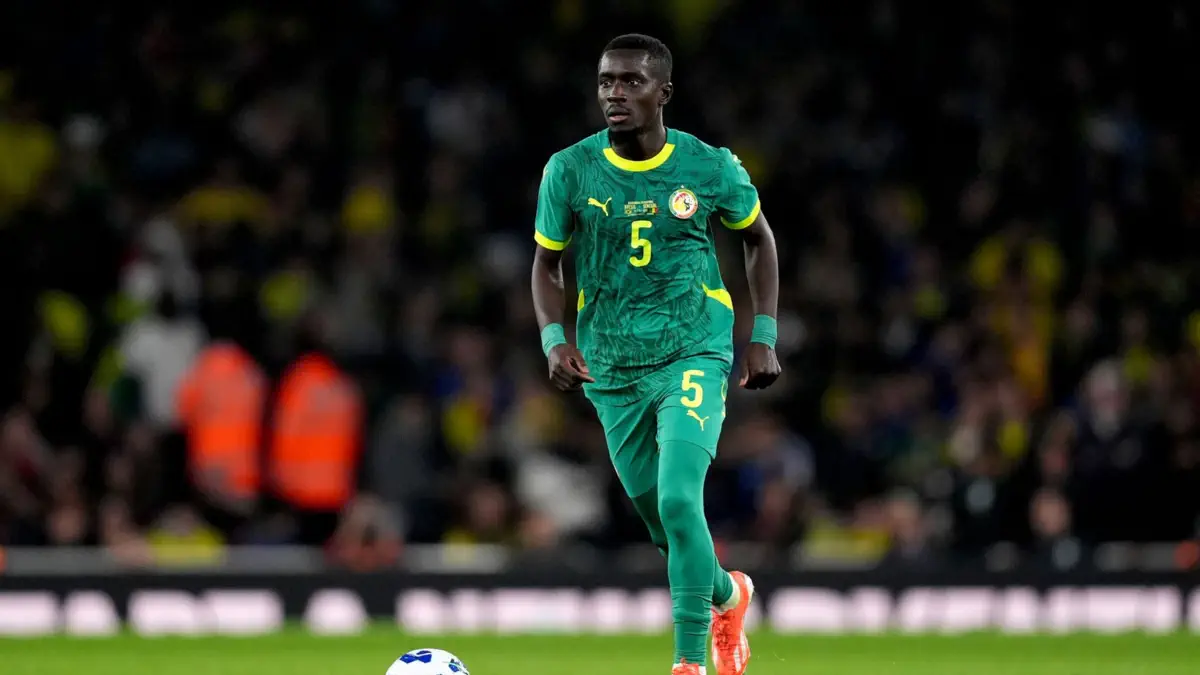
 Idrissa Gueye has reportedly stepped away from the Senegal national team, demanding a complete overhaul of the coaching staff before he will consider returning. The shocking development, confirmed by sources close to the player, has sent ripples through African football and left the Teranga Lions facing an uncertain future ahead of crucial international fixtures.
The decision, which sources describe as a “final straw” moment, stems from long-simmering tensions between the veteran midfielder and the current technical bench. Gueye, a cornerstone of Senegal’s 2022 Africa Cup of Nations triumph and a key figure in their 2022 World Cup campaign, has grown increasingly frustrated with what he perceives as tactical stagnation and a lack of respect for senior players’ input. According to insiders, the rift became irreparable following a heated exchange after a recent training session, where Gueye openly criticized the coaching staff’s preparation methods and player management.
Core of the Conflict
The specific grievances, while not officially detailed by the player or the Senegalese Football Federation (FSF), are understood to revolve around three key areas. First, there is a reported disconnect between the coaching staff’s tactical approach and the modern demands of international football, particularly in midfield transitions. Second, several senior players, including Gueye, feel that their experience and leadership are undervalued, with younger, less proven players being favored in key roles without merit. Third, and most critically, there is a belief that the current staff has failed to foster a cohesive team environment, leading to cliques and a decline in the collective spirit that defined the 2022 AFCON-winning squad.
Gueye’s stance is unequivocal: he will not rejoin the national team setup until the coaching staff is replaced. This is not a temporary sabbatical or a request for a break. It is a direct ultimatum to the FSF. The player, currently plying his trade in the Premier League, has made it clear that his loyalty is to the nation, not to the individuals currently in charge. He believes that a change in leadership is the only way to restore the team’s competitive edge and ensure a successful future, particularly with the next AFCON and World Cup qualifiers on the horizon.
Impact on Senegal’s Upcoming Campaigns
The timing of this dispute could not be worse for Senegal. With critical World Cup qualifiers and the upcoming AFCON tournament looming, the loss of a player of Gueye’s caliber is a significant blow. His experience, defensive discipline, and ability to control the tempo of a game are irreplaceable assets. More importantly, his absence creates a leadership vacuum in the dressing room. While younger talents like Pape Matar Sarr and Lamine Camara are emerging, they lack the gravitas and international experience that Gueye brings to every match.
The FSF now faces a difficult decision. Do they accede to Gueye’s demand and risk undermining the current coaching staff’s authority, or do they stand by their appointed coaches and risk losing one of their most influential players for an extended period? A source within the federation, speaking on condition of anonymity, admitted that the situation is “extremely delicate.” They acknowledged Gueye’s immense contribution to the team but also stressed the importance of maintaining institutional stability. “Idrissa is a legend, no doubt,” the source said. “But we cannot allow one player to dictate the entire technical direction of the national team. There are processes and contracts in place.”
Broader Implications for African Football
This standoff is not an isolated incident. It highlights a growing trend in African football where senior players are increasingly willing to challenge coaching structures, particularly when they feel their legacy and the team’s potential are being compromised. The dynamic between star players and national team coaches has always been complex, but Gueye’s public ultimatum raises the stakes. It forces the FSF to choose between a proven, world-class player and a coaching staff that may lack the same level of international credibility.
For Gueye, the risk is significant. At 34 years old, his international career is in its twilight phase. Walking away from the national team, even temporarily, could mean missing out on the final major tournaments of his career. However, those close to him insist that he is at peace with his decision. They argue that he is acting out of a deep sense of responsibility for the future of Senegalese football, not personal ego. He wants to leave the team in a better state than he found it, and he believes that requires a change at the top.
What Happens Next?
The ball is now firmly in the court of the Senegalese Football Federation. They must decide whether to initiate a coaching change or attempt a mediation process that could bridge the gap between Gueye and the staff. Early indications suggest that the FSF is leaning towards a diplomatic solution, perhaps by appointing an interim coach or restructuring the technical team’s roles to appease the player. However, Gueye’s camp has made it clear that anything short of a full replacement of the head coach and his key assistants will not be sufficient.
In the meantime, Senegal will have to prepare for their next fixtures without their midfield general. The team’s depth will be tested, and the coaching staff will be under immense pressure to prove that they can succeed without their star player. For the fans, it is a period of anxious waiting. They remember the glory of 2022 and fear that internal strife could derail the promising trajectory of the Teranga Lions. One thing is certain: the situation is far from resolved, and the coming weeks will be critical in determining whether Idrissa Gueye ever wears the Senegal shirt again.
For more on how player-coach dynamics shape national team success, see our analysis of Africa’s World Cup Success Exposes Asia’s Best Path Forward. Additionally, a BBC Sport report provides further context on similar disputes in African football.