
 Written by
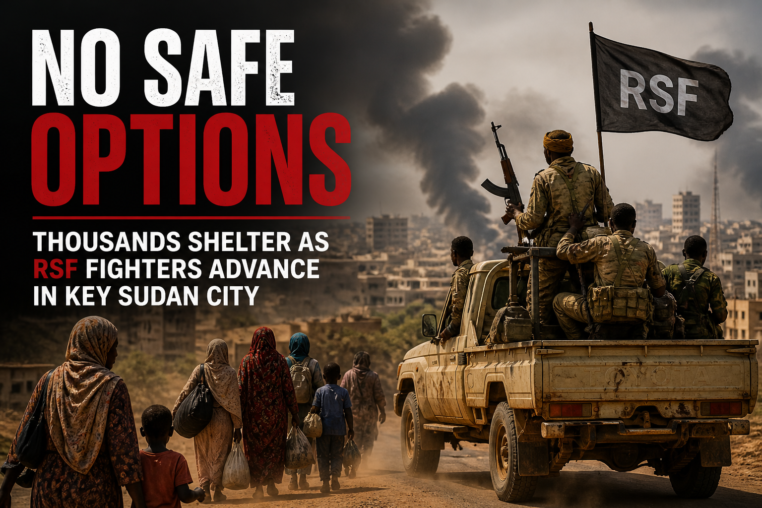
 No safe options remain for civilians in the key Sudanese city of Wad Madani as Rapid Support Forces (RSF) fighters advance, forcing thousands to flee their homes in search of shelter. The escalating conflict, which began in April 2023 between the Sudanese Armed Forces (SAF) and the RSF, has now reached the strategic agricultural and logistical hub of Al Jazirah state, approximately 100 miles southeast of Khartoum. For residents who had previously sought refuge in Wad Madani from the brutal fighting in the capital, the RSF advance represents a devastating second displacement, stripping them of any illusion of safety.
The RSF’s push into Wad Madani marks a significant turning point in the war, as the city had been a relatively stable haven for internally displaced persons (IDPs). For months, families fled Khartoum and other conflict zones, believing Wad Madani’s distance from the frontlines and its status as a state capital would offer protection. However, as RSF fighters moved in, reports emerged of looting, indiscriminate shelling, and targeted attacks on civilian infrastructure. The United Nations and humanitarian organizations have documented a rapid deterioration of conditions, with hospitals overwhelmed and food supplies dwindling. One displaced mother, speaking to aid workers, described the panic: “We left Khartoum thinking we were safe here. Now, we have nowhere to go. The RSF are at the gates, and the army cannot protect us.”
Thousands Shelter as RSF Fighters Advance in Key Sudan City
The humanitarian crisis in Wad Madani is unfolding at a staggering pace. Thousands shelter as RSF fighters advance in key Sudan city, seeking refuge in schools, mosques, and makeshift camps on the outskirts. Local volunteers and aid groups have scrambled to provide basic necessities, but resources are severely limited. The International Organization for Migration (IOM) estimates that over 300,000 people have been displaced from Al Jazirah state since the RSF offensive began, with many trapped without access to clean water, food, or medical care. The situation is particularly dire for the elderly, children, and those with chronic illnesses, who cannot endure the arduous journey to safer areas like Port Sudan or the eastern states.
The RSF’s strategy appears to involve encircling the city and cutting off supply routes, a tactic that has proven devastating in other parts of Sudan. Witnesses report that RSF fighters have seized control of key bridges and roads, preventing civilians from escaping and blocking humanitarian convoys. This deliberate targeting of civilian infrastructure has drawn condemnation from international bodies, including the African Union and the United Nations Security Council, but has done little to halt the advance. The Sudanese army, while still holding parts of Wad Madani, has been unable to mount a coordinated defense, leading to accusations of negligence and abandonment from residents.
The Human Cost of the RSF Advance
Beyond the immediate displacement, the psychological toll on survivors is immense. Many families have been uprooted multiple times, their resilience worn thin by constant fear and uncertainty. In interviews with journalists, refugees describe harrowing journeys under gunfire, leaving behind homes, livelihoods, and loved ones. A teacher who fled Khartoum in June and now faces a second flight from Wad Madani said, “We are living in a nightmare. Every time we think we have found safety, the war follows us. There is no safe options left for us.” This sentiment echoes across the city, where the RSF’s reputation for atrocities, including sexual violence and extrajudicial killings, has fueled a mass exodus.
The international community has responded with urgent appeals for a ceasefire and unimpeded humanitarian access, but concrete action remains elusive. Neighboring countries, particularly Chad and South Sudan, have absorbed hundreds of thousands of refugees, but their capacity is stretched thin. Meanwhile, aid agencies warn that the approaching dry season will exacerbate food insecurity, as farmers in Al Jazirah state, once Sudan’s breadbasket, have abandoned their fields. The United Nations World Food Programme has warned that over 20 million Sudanese are facing acute hunger, with the crisis in Wad Madani adding to the mounting death toll.
A City Under Siege
As the RSF tightens its grip, the future of Wad Madani hangs in the balance. The city’s fall would not only be a strategic victory for the RSF but also a catastrophic blow to Sudan’s already fractured civilian population. For now, thousands shelter as RSF fighters advance in key Sudan city, clinging to hope that a political solution or international intervention might yet spare them. But with each passing day, that hope grows fainter, replaced by the grim reality of a war that shows no signs of abating. The world watches, but for the people of Wad Madani, the only certainty is that no safe options remain.