
 Written by
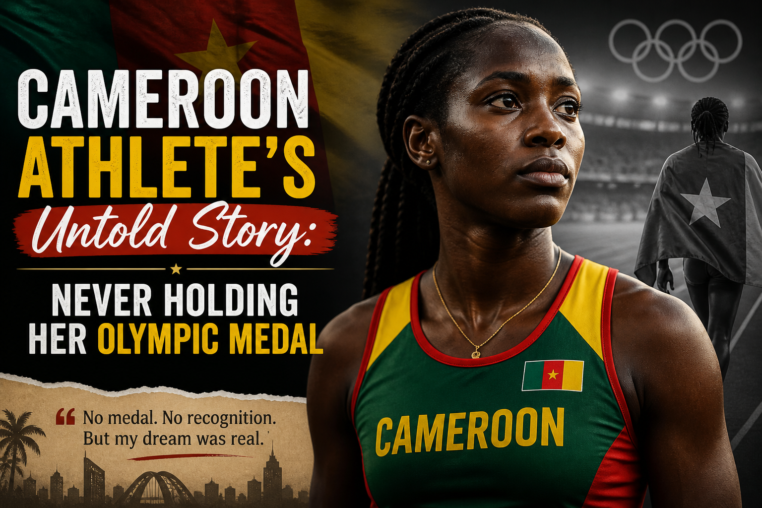
 The story of a Cameroon athlete never holding her Olympic medal is a poignant reminder that the path to glory is often paved with personal sacrifice, political turmoil, and heartbreaking injustice. While the world celebrates the triumphant images of gold, silver, and bronze being draped around the necks of champions, there are silent narratives of those who earned the right to that moment but were denied the simple, profound act of holding their hard-won prize. This is the untold story of a woman who became a symbol of resilience, not for the medal she wore, but for the one she never touched.
The athlete in question is Françoise Mbango Etone, a name synonymous with power and grace in the world of triple jump. Born in Cameroon, she rose from humble beginnings to become a two-time Olympic gold medalist, winning in Athens 2004 and Beijing 2008. Her achievements are monumental; she shattered African and Olympic records, and her second gold medal in Beijing was the first time a woman had successfully defended the Olympic triple jump title. Yet, despite these incredible feats, there is a haunting detail that few know: Mbango never held her Olympic medal in her home country. The medal, a symbol of national pride and personal triumph, was never physically in her hands during a public celebration in Cameroon.
The reason for this absence is a complex tapestry of political tension, security concerns, and personal safety. After her first gold in 2004, Mbango was celebrated as a national hero. However, the political landscape in Cameroon was fraught with instability, and the government’s relationship with its star athlete was strained. There were reports that her medal was kept in a bank vault for safekeeping, a decision driven by fears of theft or political exploitation. But the deeper, more painful truth is that Mbango herself chose not to bring the medal back to Cameroon for a public ceremony. She feared that the medal would become a political tool, used to legitimize a regime she did not fully support, or that it would put her and her family at risk.
This decision was not born from a lack of patriotism. On the contrary, Mbango’s love for her country is evident in her continued work with young athletes in Cameroon. She has funded training facilities and mentored aspiring jumpers. But the act of never holding her Olympic medal in a public, state-sponsored ceremony was a quiet act of defiance. It was a statement that her achievement belonged to her, to her personal journey, and to the people of Cameroon, not to the political machinery that sought to claim it. In interviews, she has spoken about the pressure she faced to be a “good ambassador,” but she refused to be a puppet. The medal, in her eyes, was a symbol of her own struggle, not a government trophy.
The psychological weight of this decision is immense. Imagine training for years, overcoming injuries, financial hardship, and the pressure of representing an entire continent. You win the ultimate prize. Then, you are told that you cannot hold it in your homeland because it might be stolen, or worse, used against you. Mbango’s story is a powerful commentary on the relationship between an athlete and their nation. It challenges the romanticized notion that an Olympic medal is a simple, joyful object. For her, it became a burden, a political football, and a source of anxiety.
The untold story also highlights the broader issue of how African athletes are often treated by their home governments. Many are celebrated in victory but neglected in defeat. Mbango’s case is unique because she was successful, yet she still felt the need to distance herself from the very symbol of that success. She eventually moved to France, where she trained and lived for many years. Her decision to never hold her Olympic medal in a public ceremony in Cameroon was not a rejection of her identity, but a protection of it. She was safeguarding her legacy from being co-opted.
In the end, Françoise Mbango Etone’s story is not just about a medal. It is about agency, integrity, and the courage to define success on your own terms. She never held her Olympic medal in the way the world expected, but she held onto something far more valuable: her dignity. Her legacy is not the gold around her neck, but the strength in her heart. The Cameroon athlete’s untold story is a powerful lesson that sometimes, the greatest victory is in knowing when to let go, even of the thing you fought hardest to achieve.