
 Written by
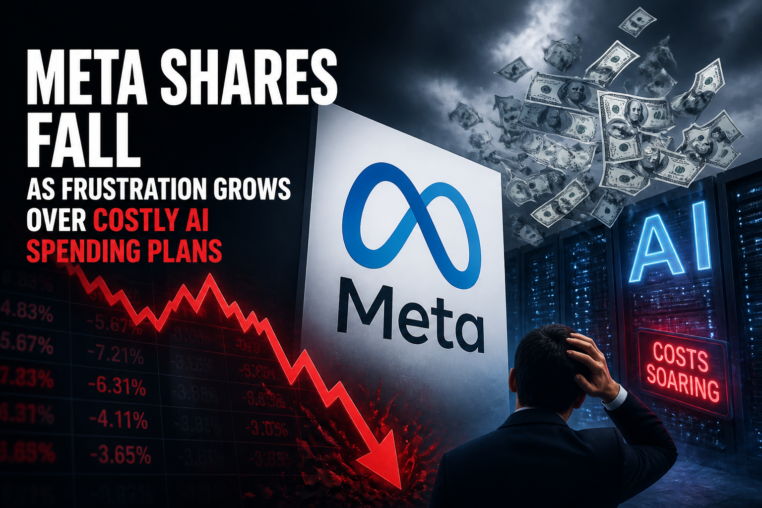
 Meta shares fell sharply this week as investor frustration mounted over the company’s increasingly expensive artificial intelligence spending plans. The stock dropped more than 5% in a single trading session after Meta Platforms revealed that its capital expenditures for AI infrastructure would surge to as high as $65 billion in 2025, far exceeding analyst expectations. This decline underscores a growing tension between the promise of AI-driven growth and the immediate financial burden it places on even the most profitable tech giants.
Meta has been aggressively investing in AI to power everything from content recommendation algorithms to its ambitious metaverse projects. CEO Mark Zuckerberg has repeatedly emphasized that AI is the company’s top priority, arguing that these investments are essential for long-term competitiveness. However, the latest earnings report painted a stark picture: while revenue grew 22% year-over-year to $40.1 billion, operating expenses climbed even faster, driven largely by data center construction, chip purchases, and research staffing. The company now expects full-year 2025 expenses to reach $114 billion, a figure that spooked investors who had hoped for more disciplined cost management.
The market’s reaction highlights a broader debate within the tech industry about the return on investment for massive AI spending. Meta is not alone—Microsoft, Google, and Amazon have all announced similar multi-billion-dollar AI budgets. But Meta’s situation is unique because its core advertising business, while still strong, faces headwinds from regulatory pressures and competition from TikTok and other platforms. Investors worry that without a clear monetization path for AI products like smart glasses or generative AI assistants, these expenditures could weigh on profitability for years.
Why Meta Shares Are Under Pressure
Meta shares have been volatile since the company first signaled its AI ambitions. The latest sell-off was triggered by comments from CFO Susan Li, who acknowledged that AI-related costs would “grow significantly” in 2025 and that the company expects “meaningful acceleration” in infrastructure spending. This language alarmed analysts who had anticipated a more gradual ramp-up. The reality is that building and maintaining AI systems requires enormous upfront capital—data centers alone can cost billions of dollars each, and the specialized chips needed for training large language models are in short supply and expensive.
Adding to the frustration, Meta’s Reality Labs division, which houses its metaverse and AI hardware efforts, reported an operating loss of $4.6 billion in the most recent quarter. While Zuckerberg remains committed to this long-term bet, many shareholders are losing patience. The combination of soaring AI costs and persistent losses in the metaverse creates a double burden that is difficult to justify in the near term.
The Strategic Rationale Behind the Spending
Despite the market’s skepticism, Meta’s leadership argues that the AI spending is not optional. The company relies heavily on AI for its core products: Facebook and Instagram’s feeds, Reels recommendations, and advertising targeting all depend on sophisticated machine learning models. Without continuous investment, Meta risks falling behind competitors like Google in search AI or OpenAI in generative AI. Moreover, Meta is betting that AI will unlock new revenue streams, such as AI-powered business tools for advertisers and virtual assistants for users.
Zuckerberg has also pointed to the potential of open-source AI models like Llama, which Meta releases for free. While this strategy builds goodwill among developers, it does not directly generate revenue. Critics argue that Meta is essentially subsidizing the AI ecosystem for others while bearing the full cost itself. However, supporters believe that widespread adoption of Llama could eventually drive users to Meta’s platforms, creating indirect monetization opportunities.
What This Means for Investors
For investors, the key question is whether Meta’s AI spending will eventually pay off. The company has a history of making bold bets—its massive investment in Stories and Reels, for example, initially seemed costly but ultimately strengthened user engagement. Yet AI is a different beast: the technology is evolving rapidly, and the competitive landscape is crowded. If Meta’s AI products fail to gain traction or if a recession reduces advertising demand, the company could face a prolonged period of margin compression.
Some analysts have downgraded Meta shares, citing the lack of a clear timeline for AI profitability. Others remain bullish, arguing that Meta’s massive user base and data advantage give it a unique edge. The truth likely lies somewhere in between. Meta will need to demonstrate tangible results from its AI investments within the next 12 to 18 months to restore investor confidence. Until then, the stock is likely to remain sensitive to any news about spending or revenue growth.
Navigating the Road Ahead
Meta’s situation is a cautionary tale for the entire tech industry. AI promises transformative change, but it comes with a price tag that can strain even the most successful companies. For Meta, the challenge is to balance innovation with financial discipline. The company has already taken steps to cut costs elsewhere, including layoffs and office closures, but AI spending remains sacrosanct.
As Meta shares continue to fluctuate, investors will be watching closely for signs that the company can turn its AI investments into sustainable growth. The next few quarters will be critical. If Meta can show that its AI initiatives are driving user engagement and ad revenue, the current sell-off may prove to be a buying opportunity. If not, the frustration over costly AI spending plans could deepen, leading to further declines. For now, the market has spoken, and it is clear that patience is wearing thin.