
 Written by
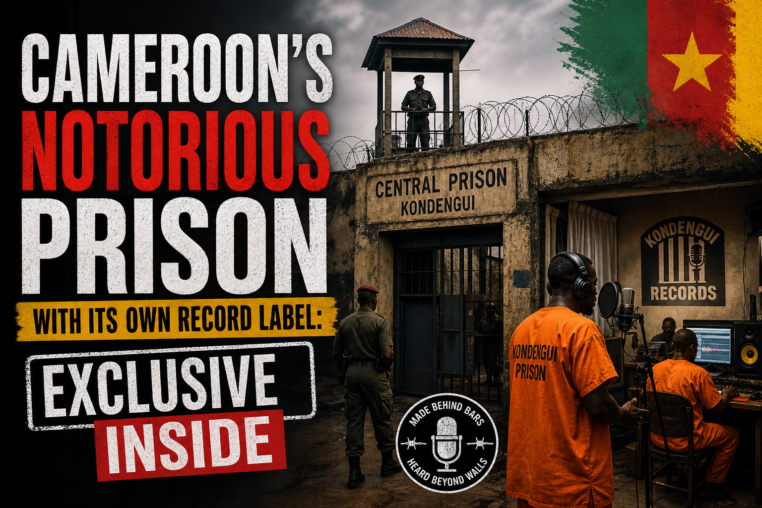
 Cameroon’s notorious prison with its own record label is an institution that defies conventional expectations. Known officially as the Kondengui Central Prison in Yaoundé, this facility has gained international attention not only for its severe overcrowding and harsh conditions but also for an unexpected cultural initiative: an in-house record label that produces music from behind bars. This unique project offers a rare glimpse into the lives of inmates, challenging stereotypes about incarceration in Central Africa and highlighting the transformative power of art.
Kondengui Central Prison, often referred to simply as Kondengui, is one of Cameroon’s largest and most infamous correctional facilities. Built to hold around 800 inmates, it routinely houses more than 4,000, leading to dire living conditions. Human rights organizations have documented issues such as inadequate nutrition, limited medical care, and prolonged pretrial detention. Yet amidst these challenges, a remarkable program has emerged: the prison’s own record label, which allows incarcerated individuals to record, produce, and release music. This initiative, launched in partnership with local nonprofits and music producers, provides a creative outlet that many inmates describe as life-changing.
The record label operates out of a small studio within the prison walls, equipped with basic recording gear donated by supporters. Inmates who show musical talent or interest can apply to participate, undergoing a selection process that prioritizes those with good behavior. The music produced spans genres from traditional Cameroonian makossa and bikutsi to hip-hop and gospel, reflecting the diverse backgrounds of the prisoners. Lyrics often address themes of regret, hope, and the harsh realities of prison life, offering an authentic voice to those who are otherwise silenced.
One of the most striking aspects of this initiative is its impact on rehabilitation. Prison officials report that participants in the music program demonstrate lower rates of disciplinary incidents and higher engagement in educational activities. The process of writing, recording, and performing music fosters discipline, teamwork, and self-expression. For many inmates, it provides a sense of purpose and a connection to the outside world. Some have even seen their songs played on local radio stations, giving them a platform that extends far beyond the prison walls.
The record label also serves as a bridge between the prison and the broader Cameroonian society. By releasing albums and singles, the project challenges public perceptions of prisoners as irredeemable. Listeners are confronted with the humanity of those behind bars, hearing stories of mistakes, growth, and resilience. This has sparked conversations about prison reform and the role of arts in rehabilitation. In a country where the justice system is often criticized for its inefficiency and harshness, the record label offers a model of restorative justice that emphasizes second chances.
However, the initiative is not without its critics. Some argue that it glamorizes incarceration or distracts from the systemic issues plaguing the prison system. Others question whether the resources spent on music production could be better used for basic necessities like food and healthcare. Supporters counter that the program addresses a fundamental human need for dignity and creativity, which can be as vital as physical sustenance. They point to success stories of former inmates who, after release, have pursued music careers or used their skills to support their families.
The logistics of running a record label in a prison are daunting. Security concerns mean that all equipment must be carefully monitored, and lyrics are reviewed to ensure they do not incite violence or disrespect authorities. Despite these constraints, the label has produced several albums that have gained modest popularity in Cameroon and beyond. Some tracks have even been featured in international documentaries about prison life, bringing global attention to Kondengui.
For the inmates, the music represents more than just a pastime. It is a lifeline to their identities and a tool for coping with the psychological toll of imprisonment. One participant, serving a sentence for theft, described how writing songs helped him process his guilt and envision a better future. Another, a former musician who fell into crime, found the studio a place to reclaim his passion and rebuild his self-worth. These personal transformations underscore the potential of creative programs in correctional settings.
The broader implications of Cameroon’s notorious prison with its own record label extend beyond its walls. It raises questions about how societies view punishment and rehabilitation. In many parts of the world, prisons are seen primarily as places of retribution, but this initiative suggests that even in the most challenging environments, human potential can flourish. It also highlights the importance of community involvement in prison reform, as the label relies on volunteers, donors, and artists from outside to sustain its operations.
As the project continues to evolve, there are plans to expand the studio and offer training in music production and business skills. This could help inmates gain marketable skills for life after release, reducing recidivism rates. The label also hopes to collaborate with mainstream Cameroonian artists, further integrating prisoners into the cultural fabric of the nation.
In conclusion, the story of Kondengui Central Prison and its record label is one of contradiction and hope. It reveals the harsh realities of incarceration in Cameroon while demonstrating the resilience of the human spirit. By giving voice to the voiceless, this unique initiative challenges us to rethink what justice and rehabilitation can look like. It serves as a powerful reminder that even in the darkest places, creativity and humanity can find a way to shine.