 Written by
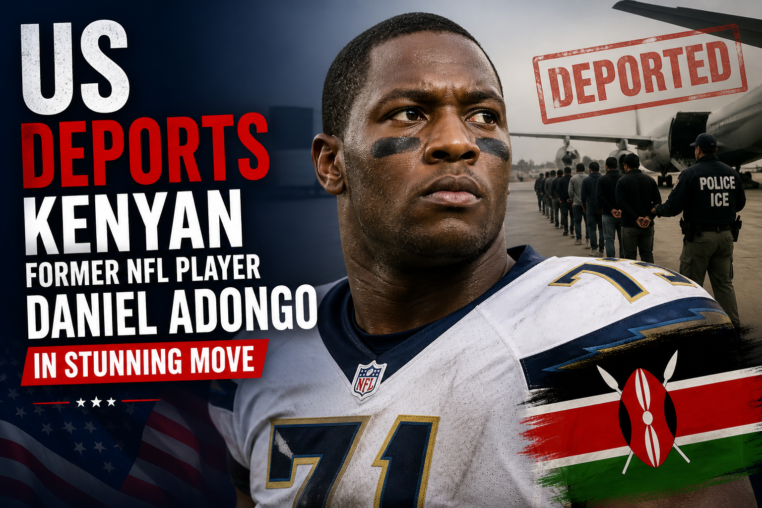
 The deportation of former NFL player Daniel Adongo from the United States back to his native Kenya has sent shockwaves through the sports world and beyond. The move, which appears to have been executed with little public warning, raises complex questions about immigration enforcement, the legal status of foreign athletes, and the personal circumstances that can lead to such a dramatic reversal of fortune. For those who followed Adongo’s unconventional path from rugby in New Zealand to the NFL’s Indianapolis Colts, the news is both startling and sobering.
Daniel Adongo’s journey to the NFL was anything but typical. Born in Kenya, he moved to South Africa and then New Zealand, where he became a professional rugby player for the Blues in Super Rugby. His raw athleticism—a rare combination of size, speed, and power—caught the attention of NFL scouts. In 2013, the Indianapolis Colts signed him as an outside linebacker, a position he had never played before. He spent two seasons on the Colts’ practice squad and active roster, appearing in five games. His story was celebrated as a testament to hard work and the American dream. However, his NFL career was short-lived, and after his release in 2015, Adongo transitioned to the Canadian Football League (CFL) and later attempted a return to rugby.
The exact reasons for his deportation remain somewhat unclear, but reports indicate it stems from a visa violation or a legal issue that made him subject to removal. The U.S. Immigration and Customs Enforcement (ICE) has not released extensive details, citing privacy laws. However, sources suggest that Adongo’s status as a non-citizen meant that any criminal conviction or overstay could trigger deportation proceedings. This is a harsh reality for many foreign athletes who, despite their fame, are still subject to the same immigration laws as any other visitor or resident. The case highlights a critical vulnerability: athletic talent does not grant immunity from the legal system.
The Immigration Landscape for Foreign Athletes
The Daniel Adongo case underscores the precarious nature of visa status for international athletes. Most enter the U.S. on P-1 or O-1 visas, which are tied directly to their employment with a specific team. Once that employment ends, their legal right to remain in the country often evaporates. For players like Adongo, who bounced between leagues and countries, maintaining a valid visa can become a bureaucratic nightmare. A single lapse, a missed renewal, or a minor legal infraction can snowball into deportation. This is not an isolated incident. Several other athletes have faced similar fates, often with less media attention. The system is designed to prioritize national security and legal compliance, leaving little room for the personal narratives of those who have contributed to American sports culture.
What Led to Adongo’s Deportation?
While official documents are sealed, several theories have emerged. One possibility is that Adongo overstayed a previous visa after his NFL career ended. Another is that he was involved in a legal incident, such as a domestic dispute or a traffic violation, that escalated to an immigration violation. In the United States, even a misdemeanor can have severe immigration consequences for non-citizens. The term “cancellation of removal” is often discussed in these cases, but it is a high bar to clear, requiring proof of long-term residence, good moral character, and extreme hardship to a U.S. citizen family member. Without a strong legal defense, deportation is often swift. The stunning move by U.S. authorities suggests that Adongo may have exhausted his legal options or lacked the resources to mount a prolonged challenge.
Reactions from the Sports Community
The news has elicited a mix of shock and sympathy from former teammates and coaches. Many remember Adongo as a hardworking, charismatic figure who was always willing to learn. His transition from rugby to American football was a media sensation, and his presence in the Colts’ locker room was seen as a positive force. However, the sports world is often insulated from the harsh realities of immigration law. This case serves as a wake-up call. It demonstrates that the protections afforded to celebrities are not absolute. The NFL Players Association has not issued a formal statement, but individual players have expressed their sadness on social media, calling for more transparency and compassion in the process.
The Broader Implications
The deportation of Daniel Adongo is more than a personal tragedy; it is a reflection of a larger system that often lacks nuance. The United States is home to millions of immigrants, many of whom live in constant fear of removal. For a former professional athlete to be caught in this net shows that no one is immune. It also raises questions about the support systems available to foreign athletes after their playing days are over. Many are left to navigate complex legal systems alone, without the guidance of team lawyers or agents. Adongo’s case may prompt calls for better post-career transition programs and clearer legal pathways for athletes who wish to remain in the country.
As Daniel Adongo returns to Kenya, his future remains uncertain. He has a family and a life that was partially built in the United States. The stunning move by U.S. immigration authorities has closed a chapter in his life, but it also opens a broader conversation about fairness, second chances, and the human cost of strict enforcement. For now, the sports world watches and wonders what could have been done differently, and what this means for other international athletes chasing their dreams on American soil.