 Written by
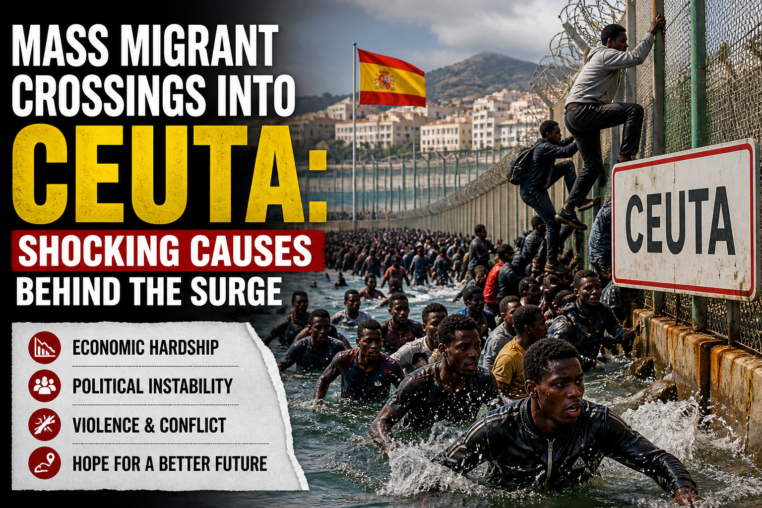
 Mass migrant crossings into Ceuta have repeatedly thrust the small Spanish enclave on the North African coast into the global spotlight. While the images of hundreds of people swimming around the breakwater or scaling the border fence are dramatic, they are merely the visible symptom of a deeply complex geopolitical and humanitarian crisis. To understand why this specific location becomes a flashpoint, one must look beyond the immediate chaos and examine the intricate web of push and pull factors that converge on this tiny piece of European soil in Morocco.
The geography of Ceuta is the primary catalyst for its unique migration dynamic. Situated on the southern shore of the Strait of Gibraltar, it shares an 8-kilometer land border with Morocco, yet it is part of the European Union. This creates a stark economic and political disparity visible from the beach. For migrants, many of whom have already traversed thousands of kilometers from sub-Saharan Africa, the Middle East, or South Asia, Ceuta represents the closest and most accessible gateway to the “European Dream.” The proximity is so close that on a clear day, one can see the Spanish mainland across the water, making the final leg of the journey feel tantalizingly achievable.
The Shocking Causes Behind the Surge: A Catalyst of Diplomatic Tension
While geography provides the stage, the specific surges in mass crossings are rarely organic. The most significant spikes, such as the historic event in May 2021 when over 8,000 people entered Ceuta in a single day, are often directly correlated with diplomatic crises between Spain and Morocco. This is the shocking cause that often goes unreported in initial news flashes: the use of migration as a political lever.
Morocco has long viewed the border as a pressure valve. When relations with Madrid sour—whether over issues of Western Sahara sovereignty, territorial waters, or the presence of Spanish diplomats—Rabat can loosen its border security as a punitive measure. In 2021, the crisis erupted following Spain’s decision to host the leader of the Polisario Front for medical treatment. In retaliation, Moroccan border guards reportedly stood aside, allowing thousands of desperate individuals to surge through the gaps in the fence and swim around the sea walls. This “weaponization” of migration demonstrates that the surge is not merely a failure of border control, but a deliberate act of statecraft, turning human desperation into a diplomatic bargaining chip.
Economic Desperation and the Search for Stability
Beyond the political machinations, the underlying driver remains the brutal reality of economic disparity. The migrants who risk drowning in the strong currents or being crushed against the rocky breakwater are fleeing poverty, unemployment, and lack of opportunity. The contrast between the struggling economies of many African nations and the relative prosperity of Spain is a powerful magnet.
Furthermore, the surge is fueled by a sense of “now or never.” As European border security tightens and legal migration pathways remain limited, the enclave becomes a bottleneck. Migrants often wait in informal camps in the forests of Bel Younech in Morocco for months, waiting for the opportune moment—often a foggy morning or a distracted patrol—to make a run for it. The desperation is compounded by the knowledge that the window of opportunity may close if political relations between the two countries improve and border security is reinforced.
The Humanitarian Toll and the Response
The surge in crossings is not just a statistical anomaly; it is a humanitarian emergency. The waters around Ceuta are treacherous, with strong currents and cold temperatures leading to hypothermia and drowning. Those who successfully navigate the sea often arrive exhausted, injured from the razor wire, or suffering from severe dehydration.
The Spanish response has been a mix of humanitarian aid and swift repatriation. Upon arrival, migrants are processed at temporary reception centers, where NGOs provide food, water, and medical care. However, the sheer volume of a mass surge overwhelms these facilities. In the 2021 incident, thousands were forced to sleep in the open air, in warehouses, or on the streets of Ceuta, leading to local tensions. Spain’s policy has generally been to return migrants to Morocco under bilateral agreements, but this process is often delayed by legal challenges and the need to identify unaccompanied minors, who cannot be immediately deported under EU law.
The Future of the Ceuta Border
Looking forward, the situation remains volatile. The “shocking causes” behind the surges are unlikely to disappear. As long as the economic divide between Africa and Europe persists, and as long as the Western Sahara conflict remains unresolved, the border will remain a pressure point. The recent re-opening of the commercial border in 2022 and the mending of diplomatic ties have reduced the frequency of mass crossings, but the underlying powder keg remains.
The European Union has pledged funds to improve border infrastructure and to support Morocco in managing migration, but this approach treats the symptom rather than the disease. Until there is a comprehensive strategy that addresses the root causes of migration—conflict, climate change, and economic inequality—and until diplomatic relations between Madrid and Rabat are placed on a more stable footing, the shores of Ceuta will continue to witness the desperate gamble of those seeking a better life. The world watches these crossings not just as a border issue, but as a mirror reflecting the profound inequalities of our global order.