 Written by
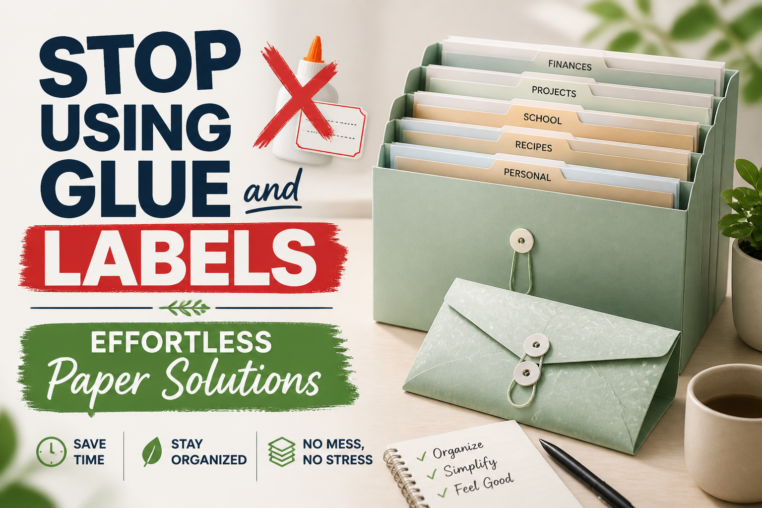
 Stop using glue and labels when you can achieve clean, professional paper projects with effortless paper solutions that rely on clever folding, interlocking tabs, and strategic cutting. For decades, crafters, office workers, and DIY enthusiasts have reached for sticky adhesives and peel-and-stick labels as default tools. Yet these common supplies often lead to frustration: glue that wrinkles thin paper, labels that peel off over time, and sticky residues that ruin surfaces. The good news is that a world of adhesive-free techniques exists, offering faster, cleaner, and more sustainable results.
The Hidden Costs of Glue and Labels
Before exploring alternatives, it helps to understand why glue and labels can be problematic. Liquid glue requires drying time, which slows down projects. It can warp delicate paper, create uneven surfaces, and leave unsightly bubbles. Glue sticks, while faster, often lose their tackiness over time, causing pieces to separate. Labels, meanwhile, come with their own issues. They can be difficult to align perfectly, and once applied, repositioning is nearly impossible without tearing the paper. Removing a misapplied label often damages the surface underneath. Additionally, both glue and labels introduce chemicals and waste into your projects. For anyone working with archival materials, important documents, or children’s crafts, these drawbacks are significant.
Effortless Paper Solutions: The Power of Folding and Scoring
One of the most reliable effortless paper solutions is mastering folding and scoring techniques. A simple bone folder or the back of a butter knife can create crisp, permanent creases that hold paper together without any adhesive. For example, a basic origami box requires no glue at all—just precise folds. Similarly, greeting cards, brochures, and booklets can be constructed entirely through folding. Scoring the paper along the fold line first prevents cracking and ensures a professional finish. This method works especially well with heavier cardstock or textured papers that resist glue. By relying on the paper’s natural structure, you create durable, clean-edged projects that look handmade but are surprisingly simple to execute.
Interlocking Tabs and Slots: A Mechanical Bond
For projects that need to hold together without glue, interlocking tabs and slots offer a brilliant solution. This technique involves cutting small tabs on one piece of paper and corresponding slots on another. When the tabs are inserted into the slots, they lock securely in place. This is commonly seen in pop-up books, 3D paper sculptures, and even some packaging designs. To use this method, simply plan your cuts carefully. A craft knife and cutting mat give you the precision needed. For instance, a paper photo frame can be assembled by cutting tabs on the sides of the backing piece and slots on the front frame. The result is a sturdy, glue-free structure that can be disassembled and reused. This approach is ideal for temporary displays, prototypes, or projects where you want to avoid permanent bonding.
The Art of Paper Weaving and Layering
Another effortless paper solution involves weaving strips of paper together or layering them without adhesive. Paper weaving creates a textured, decorative surface that holds itself together through tension. You can weave two contrasting colors of paper to make placemats, bookmarks, or card fronts. The friction between the strips keeps them in place. Layering, on the other hand, uses the weight and shape of the paper itself. For example, stacking multiple cut-out shapes on top of each other can create depth and dimension without glue. A simple greeting card can feature layered circles or leaves that are tucked into slits or held by the card’s fold. This technique is especially useful for scrapbooking and card making, where you want a clean, modern look without visible adhesive.
Using Paper Fasteners and Clips as Alternatives
Sometimes a project requires a more secure bond than folding alone can provide. In these cases, paper fasteners, binder clips, and paper clips offer excellent glue-free alternatives. Brass paper fasteners, for instance, can hold multiple layers of paper together while allowing them to pivot. This is perfect for interactive cards, flip books, or educational tools. Binder clips provide a strong, removable hold for thicker stacks of paper, making them ideal for reports, notebooks, or temporary bindings. Even simple paper clips can be used creatively to attach tags, photos, or small pieces. These fasteners are reusable, which reduces waste and allows you to change your design later. They also add an industrial or vintage aesthetic that glue cannot replicate.
Practical Applications for Everyday Projects
These effortless paper solutions are not just for crafters. They have real-world applications in offices, schools, and homes. For example, instead of using sticky notes that lose their adhesion, you can create a reusable to-do list by cutting slits in a piece of cardstock and sliding paper strips through. Instead of gluing a photo into a scrapbook, you can create corner pockets from folded paper that hold the photo securely. Instead of using labels for file folders, you can write directly on a tab that is folded from the folder itself. These small changes save time, money, and frustration. They also make your projects more sustainable, as you avoid disposable adhesives and plastic-coated labels.
Why You Should Make the Switch
Adopting glue-free and label-free techniques transforms the way you work with paper. You gain more control over your projects, reduce mess, and eliminate waiting time for adhesives to dry. Your creations become more durable, easier to modify, and often more visually appealing. Whether you are a professional designer, a teacher, a parent, or someone who simply enjoys paper crafts, these methods empower you to create with confidence. The next time you reach for a glue stick or a sheet of labels, pause and consider whether a fold, a slot, or a clip could do the job better. You may find that the most effortless paper solutions are the ones that require no adhesive at all.