
 Written by
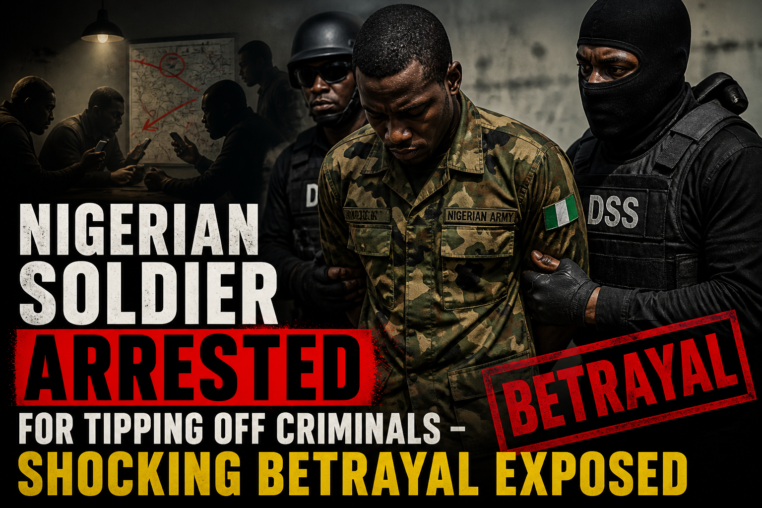
 A Nigerian soldier has been arrested for tipping off criminals, a shocking betrayal exposed during a routine security operation in the country’s volatile northeastern region. The arrest has sent ripples through military ranks and raised serious questions about internal security and corruption within the armed forces. This incident, which came to light after an extensive intelligence-led investigation, underscores the persistent challenges faced by Nigeria in its fight against insurgency and organized crime.
The soldier, whose identity has been withheld pending further investigations, was reportedly deployed to a high-risk area tasked with counterinsurgency operations. However, instead of upholding his oath to protect civilians and national security, he allegedly collaborated with criminal elements, providing them with advance warnings of planned military raids and patrols. According to military sources, the betrayal was uncovered when a coordinated sting operation intercepted communications between the soldier and known bandits. The evidence gathered included phone records, text messages, and testimonies from informants, all pointing to a pattern of deliberate leaks that compromised multiple missions over several months.
This arrest highlights a deeply troubling trend within Nigeria’s security apparatus. While the majority of soldiers remain dedicated and professional, incidents of corruption and collusion with criminals erode public trust and undermine operational effectiveness. The Nigerian Army has long struggled with issues of discipline and loyalty, particularly in regions where insurgent groups like Boko Haram and bandit networks operate with impunity. The soldier’s actions not only endangered his comrades but also gave criminals a strategic advantage, allowing them to evade capture and continue their violent activities.
The implications of this betrayal are far-reaching. For one, it exposes vulnerabilities in the military’s internal vetting processes. How could a soldier with access to sensitive operational information be so easily compromised? Analysts suggest that low morale, inadequate pay, and the allure of financial incentives from criminal networks often tempt soldiers into such treacherous acts. In this case, the soldier is believed to have received substantial sums of money in exchange for his cooperation, a common pattern in similar cases across the region. The military has since launched a thorough review of its personnel screening procedures to prevent future breaches.
Moreover, this incident serves as a stark reminder of the complex nature of Nigeria’s security crisis. The lines between state forces and criminal groups can sometimes blur, with soldiers occasionally acting as double agents. This not only hampers counterinsurgency efforts but also fuels a cycle of violence and impunity. Communities in affected areas often express frustration, feeling that they cannot trust the very forces meant to protect them. The arrest, while a step toward accountability, does little to restore immediate confidence. Long-term solutions require systemic reforms, including better oversight, higher wages, and psychological support for troops exposed to constant danger.
The Nigerian military has responded swiftly to the arrest, emphasizing its zero-tolerance policy toward misconduct. A spokesperson for the Army confirmed that the soldier is in custody and will face a court-martial. If found guilty, he could face severe penalties, including dismissal from service and imprisonment. The military also urged the public to report any suspicious activities within its ranks, encouraging a culture of transparency and accountability. However, critics argue that such measures are reactive rather than proactive. They call for more robust intelligence units within the military to monitor personnel behavior and detect potential leaks before they cause harm.
This case also sheds light on the broader issue of criminal infiltration in state institutions. From police to customs, reports of officials aiding criminals are not uncommon in Nigeria. The soldier’s arrest is a microcosm of a larger problem that requires a multi-agency approach to address. Collaboration between the military, police, and intelligence services is essential to root out corruption and ensure that those entrusted with national security remain loyal to their duty.
In conclusion, the arrest of a Nigerian soldier for tipping off criminals is a shocking betrayal exposed by diligent intelligence work. It reveals the deep-seated challenges within the country’s security forces and the ongoing struggle to maintain integrity in the face of corruption. While the military’s swift action is commendable, it must be followed by sustained efforts to reform internal processes and rebuild public trust. Only through comprehensive changes can Nigeria hope to effectively combat the criminal networks that threaten its stability. The soldier’s fate will be closely watched, serving as a test of the military’s commitment to justice and accountability.